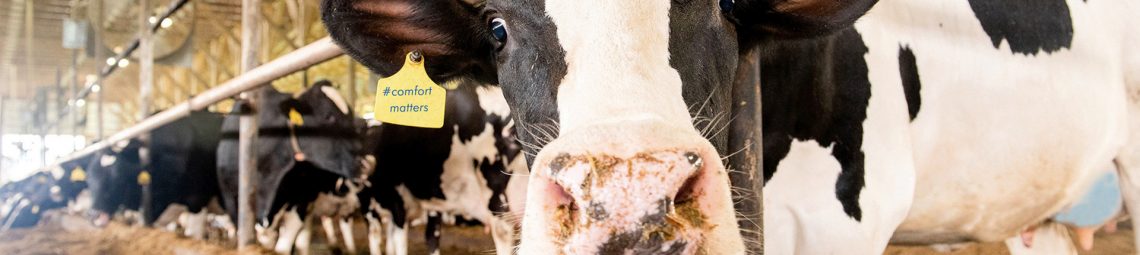


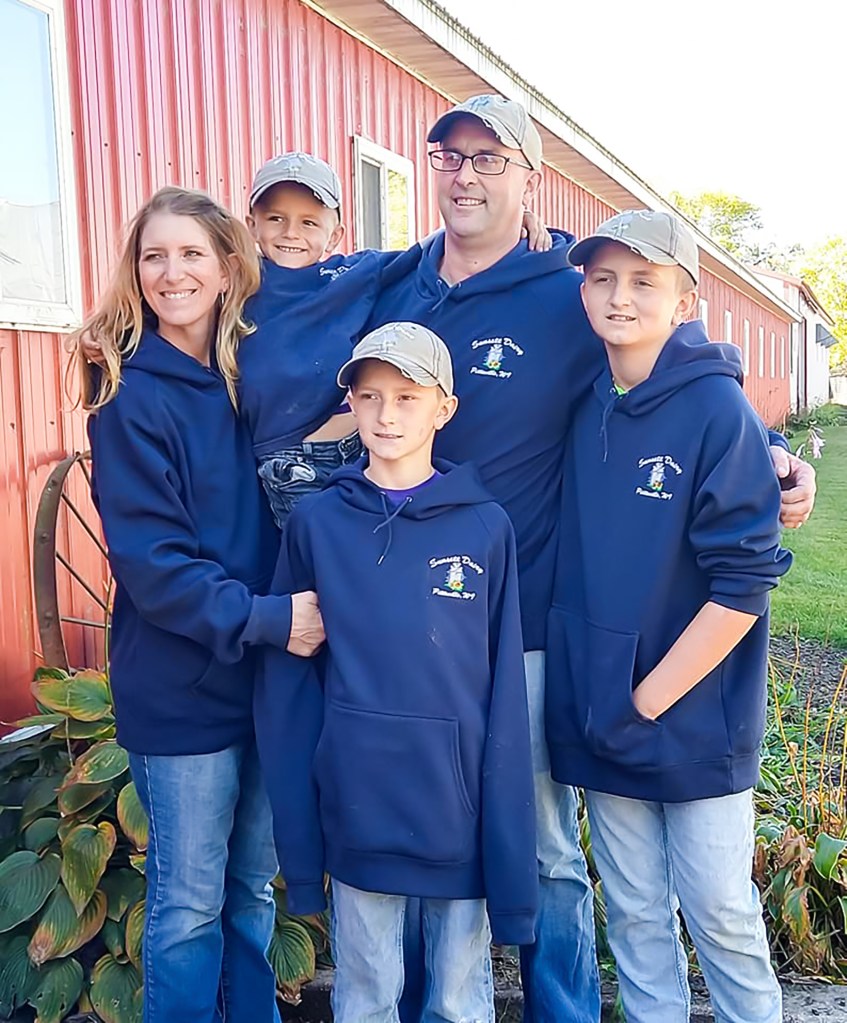
PITTSVILLE, Wisconsin – Alan and Stephanie Hughes wouldn’t want to raise their three sons any other way. They love dairy farming, working with a 60-cow herd of registered Jerseys, Holsteins, Ayrshires and Milking Shorthorns in a rotational grazing setup. They began renting Alan’s home farm in Thorp, Wisconsin and purchased cows in 2007 — then purchased their own farm, Sunsett Dairy in Pittsville, Wisconsin on July 5, 2015.
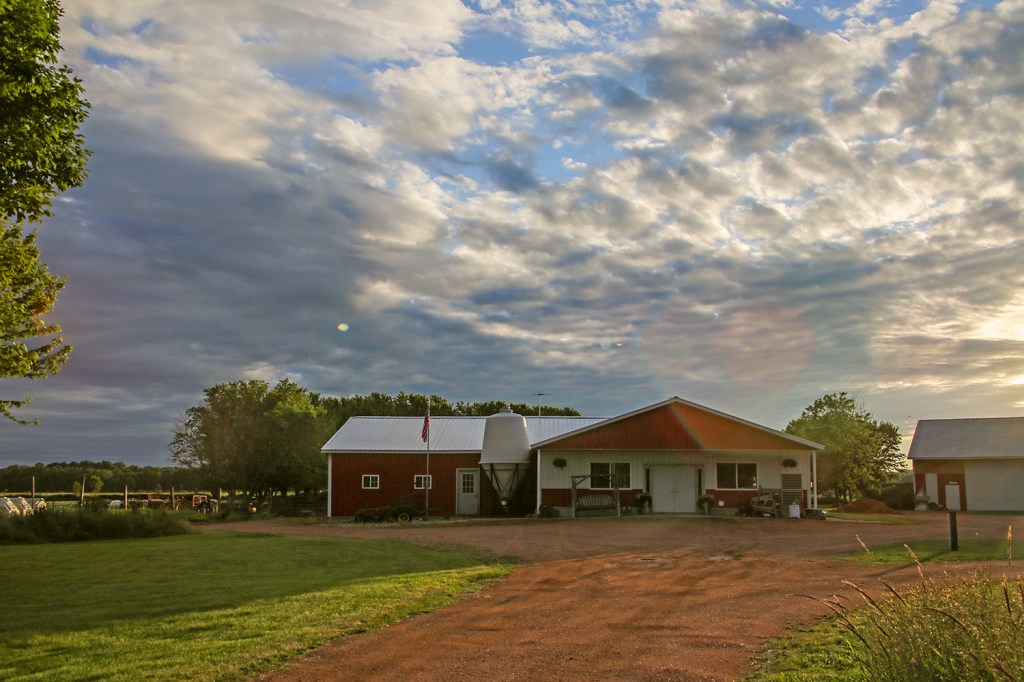
Stephanie runs the herd, and Alan does the crops. Their three sons Bryce, Gavin, and Derek love nothing more than to get their barn clothes on and get to the chores.
Steph and Alan met at the University of Wisconsin-River Falls, he in agriculture, she in dairy science. They worked and saved to make their dream of having their own dairy farm a reality.
All of this time, Alan has also served in the Wisconsin Air National Guard as well as having previously worked part-time as an aircraft mechanic at the local airport. In 2019, he was deployed to the Bagram Airforce Base in Afghanistan as part of the 115th Fighter Wing.
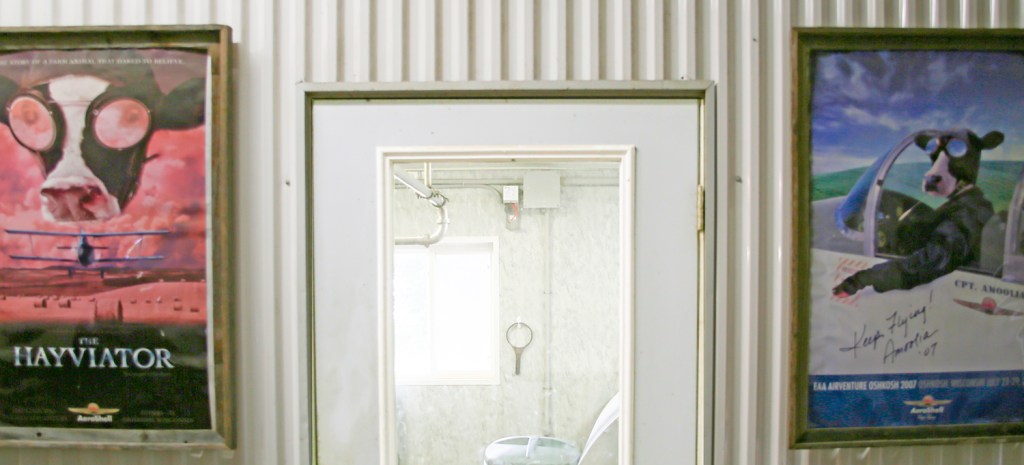
His break from farming just happens to be working on fighter jets. While in Afghanistan, “all of the harvest work fell on Steph’s shoulders,” said Alan in a Wisconsin Farm Bureau interview. “That is a lot of work for one person, so I was looking forward to being back to help with planting.”
But the spring of 2020 came in with other plans as the Covid-19 pandemic emerged. In April, the virus was in the Midwest, and Alan was called to assist with the testing process.
Today, the schedule has normalized a bit (if one can ever say the word ‘normal’ in regard to farming and military service). Alan is glad to be farming with his family again and splits his time now serving as Wisconsin Air National Guard F-35 crew chief.

The Hughes family loves the rotational grazing routine for their cows. They board cows for others also, and Steph is known to get great results with just the right touch for breeding them.
Their youngest son Derek was pictured on the cover of the July 2023 Holstein International with Carlaton Diamondback Raven VG-88. The picture was made last fall when Raven was a fresh 3-year-old. The Hughes had received a call from the internationally acclaimed magazine for a visit after the 2022 World Dairy Expo and were asked to have one cow clipped and ready. They chose Raven for the HI visit as their leading lady among the Holsteins in the herd.
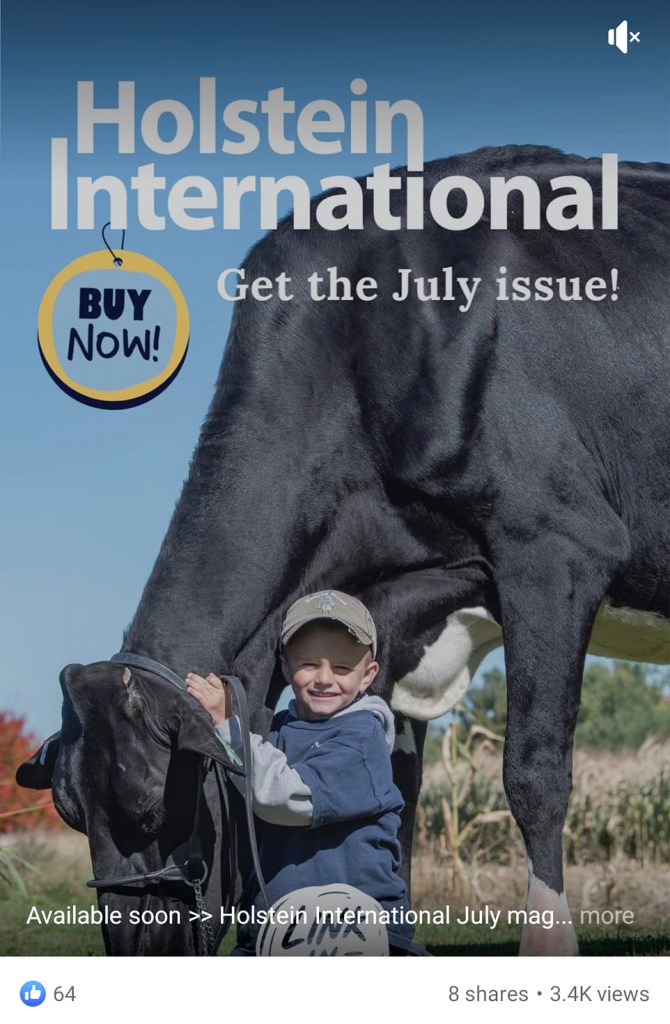
“Her dam came to us from my parents, bred to Diamondback. They got out of the milking business and sold their cows, keeping only heifers showing promise as show project animals for grandchildren,” Steph explains.
“We put her on our rotational grazing system and got her to EX. She had this Diamondback heifer calf (Raven), and Dad picked her up at a couple days old and raised her,” Steph relates. “Any boarded animals of theirs that has a heifer with potential to show goes to our niece and nephew. Dad raises them up in pairs, and we have half a dozen to a dozen here (coming back as milking animals) and are using sexed semen for breeding.”

Raven is special to Derek, who refers to her as “Ray-Ray”. She was born at Sunsett Dairy and returned there for all of her milking life. Steph’s nephew, Deagan Sandelier, shows her. Cousins Derek and Deagan have a special mentoring bond, both loving this cow.
Raven has done quite well, she was named 2021 Reserve Grand Champion Bred-and-Owned Holstein Cow of the Wisconsin Junior State Fair.
“That means a lot to me as with any cow I have been a part of boarding here,” she says. To get progeny and show potential animals is a big deal. There’s a timing technique. It’s art and science.
“I try to get progeny for them the best I can so they have a future for that cow, a future for her and her progeny going forward,” she explains.
In fact, six animals Steph bred were shown at the Wisconsin State Fair, although they didn’t all have their prefix or ownership. Raven’s Doc daughter, a June calf, placed second in the junior show at the State Fair. Other highlights from the Wisconsin Junior State Fair include second-place Jersey winter calf and second-place Jersey fall yearling, both of which are bred-and-owned. And last but not least, a winter Ayrshire calf that Steph bred, but was owned and led by her niece Livia Sandelier, was Supreme Champion Heifer at the 2023 Central Wisconsin State Fair.
Having served as a herd manager before starting their own dairy farm, Steph loves breeding cows and helping bring their calves into the world.

For their own children, Steph and Alan love the life lessons they learn and the work ethic they’ve developed and demonstrated in and out of the barn.
The rotational grazing management is central to the Hughes family’s plan. “We have very healthy cattle. They are laying in their natural environment on grass and dirt. They come in for a nice grain ration for production. They go out after milking and graze and fertilize the ground for us,” Steph explains, adding that this is part of practicing land conservation for them.
They grow crops for the cattle also, but they let them fertilize and mow the hay themselves. “We’re not burning electricity with fans inside and we’re not using fuel mowing and chopping all the hay.”
The cows come in for more of their forages in the TMR once October and November roll around until grazing begins again in the spring.
“We have basically two different styles of management when it comes to production efficiency in the summer to keep expenses down, reduce the labor costs and use that natural environment, which helps with avoiding high somatic cell counts and mastitis issues,” Steph points out.
On the other hand, “production and efficiency together keep the farm going, while producing progeny with show potential is rewarding,” she confirms. “Dad knows how far the calves can be spoiled, but when they get here (as milking animals), they run with everyone else. We treat everything the same.”
What does that mean? Well, for the Hughes family, it means having a heart for cows, providing top-notch care, while keeping it natural, and managing a system that focuses on both production and efficiency.

During a 2016 visit to Sunsett Dairy, a year after they bought the farm, we met one of their special Jerseys, Petunia. “In June 2021, Petunia went EX-95, a once in a lifetime score we are proud of,” Steph recalls, noting that they lost her in July of 2022 at 14 years old.
Petunia’s dam was one of the first cows to anchor the herd in 2007. Petunia was in the womb, so she carried the Meadowridge prefix when she was born. The Hughes have six of her offspring at Sunsett Dairy today, and they have sold breeding bulls out of Petunia to other farmers.
“Petunia was a farm favorite, our princess, and a showring veteran,” Steph relates. “She was in every family photo here on the farm.
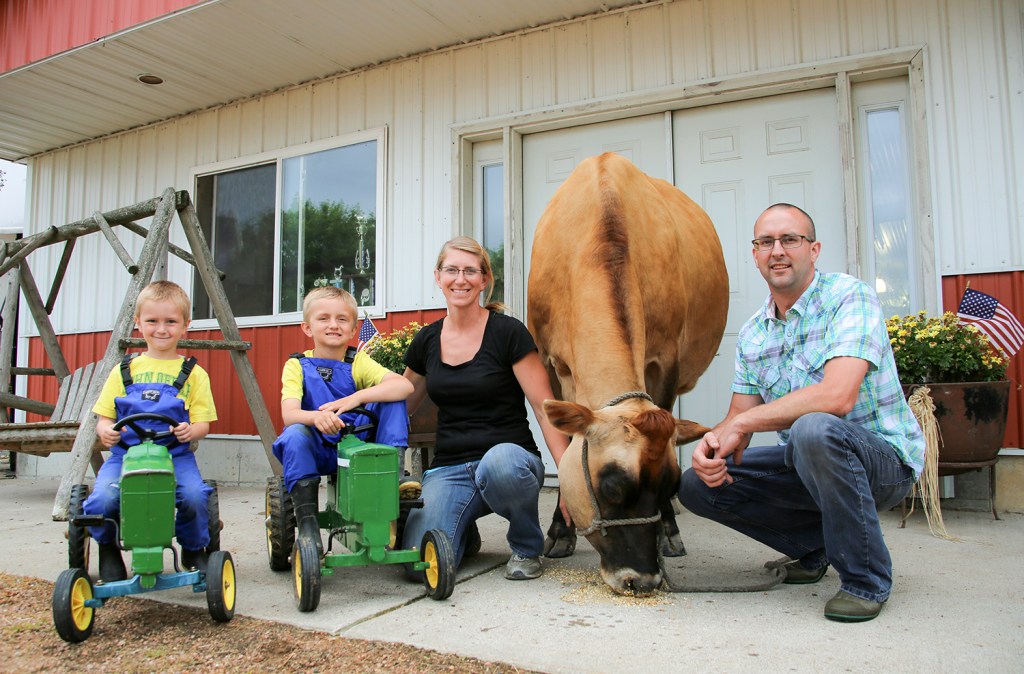
In fact, when HI photographed the family with Raven, it was the first time the family had used another cow in a photo.

Everything here is about the future – the next generation in cow families and their own extended family.
“We want to produce babies that can help our kids and our nieces and nephews shine,” she says, adding that helping any of the cows boarded here progress with progeny is a definite high priority.”
The Hughes take care of other animals on the farm, grow some produce in the garden and opened a small farm store in 2020 during the pandemic.
“Our kids know and learn about this lifestyle 365 days a year,” says Steph. “Whether it’s productivity or showing, animals need to be cared for. Our kids work hard alongside us. They prepare their own animals and help us take care of the herd here. The results will show if you put the time in.”

Whether the cows are in their spring and summer grazing routine, and especially in the winter months when they are kept more inside, Steph says “Udder Comfort also gives results we can count on. It is my first line of defense for 15 years both here, and when I was herd manager elsewhere. It’s our go-to for everything and wonderful for fresh cows, keeping the udders soft and supple during that first week after calving to protect the ligaments and really get fresh cows going.”
Steph also uses it proactively to manage udder condition throughout lactations, as needed.
“There are days I come in, and I can see we may have a quarter affected. We rub Udder Comfort on and evaluate the next morning. When that happens, which is rare, we milk that cow either last or in a bucket the next time to make sure, and if she has an elevated SCC, we won’t put her in the tank until she’s better,” she says.
“We find that we not only save money by being proactive, we also help support that cow as she builds immunity to fight back. The other night we had one with a hard quarter, applied Udder Comfort to soften it, and by the next night it was gone.”
Like anything with dairy farming, much depends on the weather, and the kind of year it is, environmentally. “If it is wet and damp, raining and muddy, we are more proactive. When it’s dry like this year, there is less risk,” she says.
“Be flexible, and roll with it,” Steph says is good advice learned since starting their own dairy. “That’s true for cows too. It’s good to have this versatile product to rely on.”
The herd’s somatic cell count runs consistently below 200,000.
When it comes to show cows, Steph points out that, “Udder Comfort gets them ready quickly. We use it on the seam and the suspensory ligament when bagging at a show or when a cow comes fresh here.
“We love cows, and we love producing a nutritious quality product for consumers. That’s why we love Udder Comfort.. We love the effectiveness. Nothing else compares,” she says.
— By Sherry Bunting
Photo credits: 2016 photos by Sherry Bunting, 2022 photos captured by a friend during the Holstein International visit and photo shoot on the farm.

-30-
 Profiles in comfort and quality