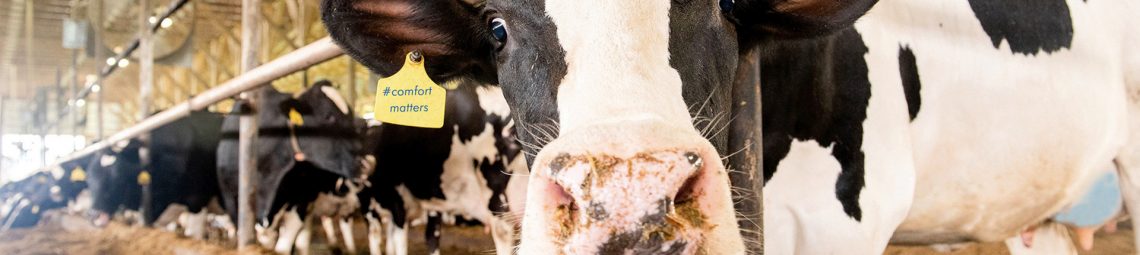

MAYNARD, Iowa — At Stempfle Holsteins, cow comfort isn’t just a philosophy, it’s a foundation. For herdsman Scott Stempfle, every management decision comes back to keeping cows comfortable to be healthy and productive.
“If we don’t have cow comfort, nothing else really seems to matter,” he says.
That belief guides every detail at the family’s northeast Iowa dairy. Their 1100 cows on test average 92 to 97 pounds of daily milk, with 4.5 to 4.8% butterfat, 3.2 to 3.3% protein, and a somatic cell count averaging around 120,000 in summer, dipping as low as 80,000 in winter.
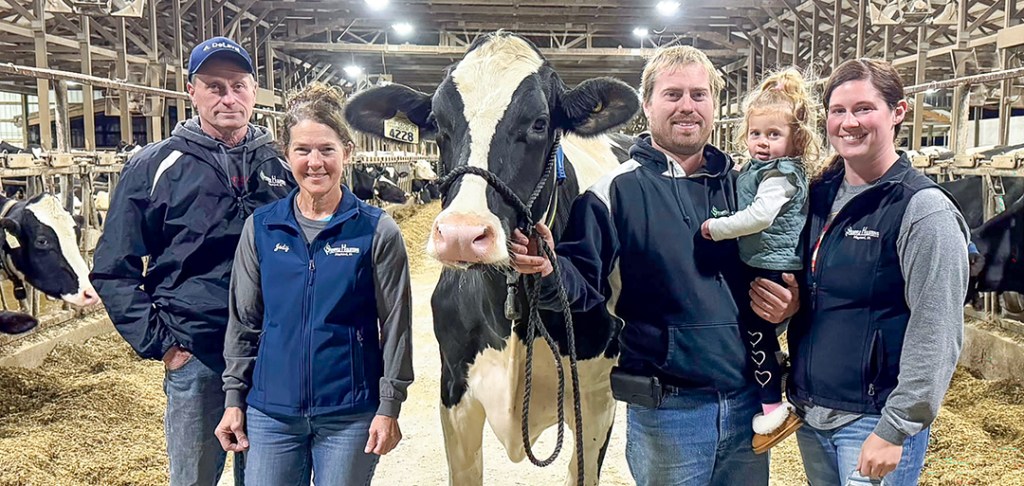
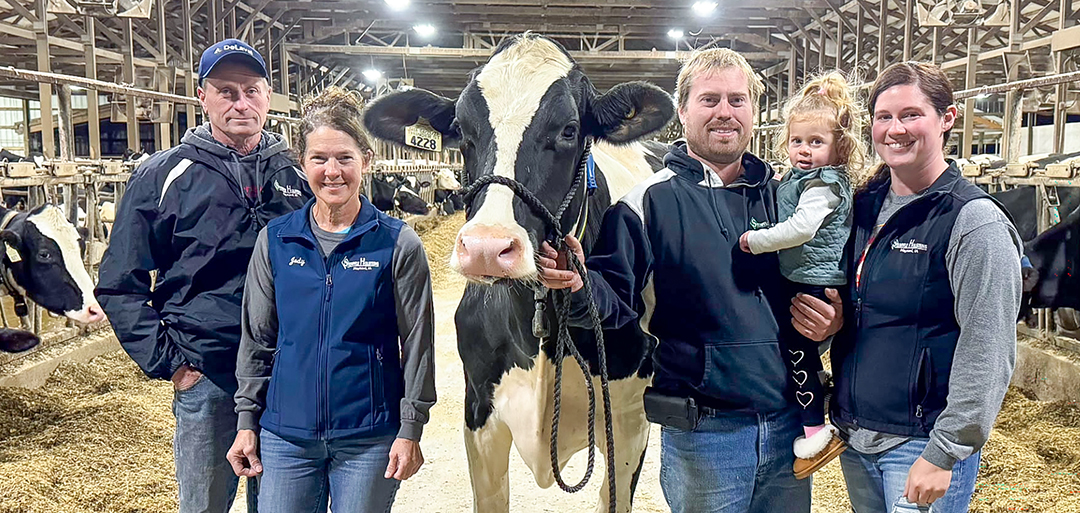
On this second and third generation family farm, Scott and his wife Alannah work alongside his parents Paul and Jody, his sister Jess, and their employees in a team effort, managing their registered Holstein herd of 1100 cows plus youngstock and cropping 1300 acres to produce the feed. Scott and Alannah’s daughter is now the fourth generation already toddling around the calf barn.
Paul mixes feed and coordinates cropping with Scott; Jody and Alannah care for calves and heifers across three sites; and Scott handles herd health and breeding, milking protocols and employee management, bedding and sand-lane management, along with parlor and data systems.
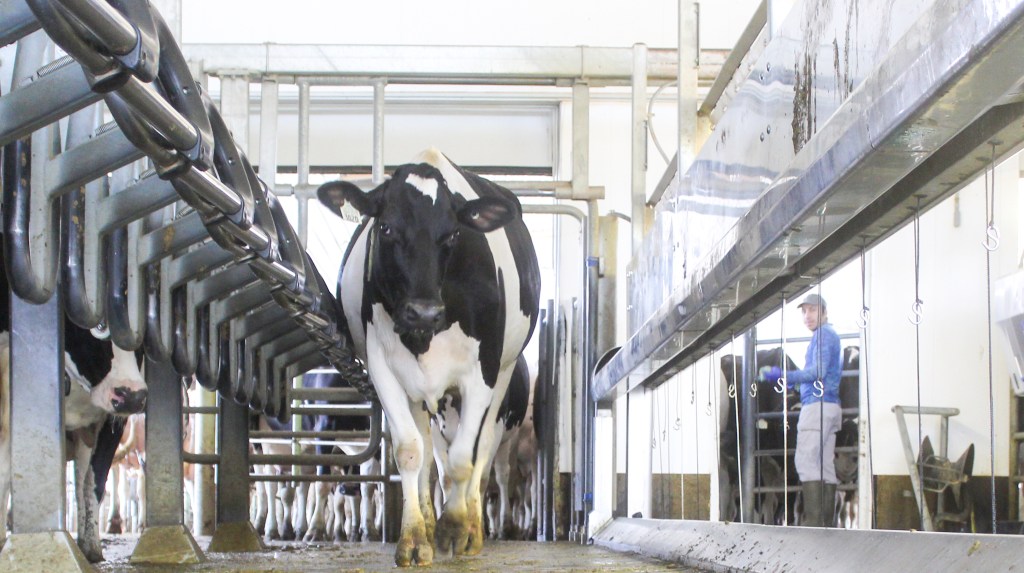
“Technology helps one person manage this many cows efficiently,” Scott says, grateful for the trust his parents have placed in him.
“I get to oversee all aspects of the operation and be involved in pretty much the whole picture. I’ve been very fortunate to be put in this position where I can make a lot of the decisions as a young person to really build and mold me to shape our farm for the future,” he observes.
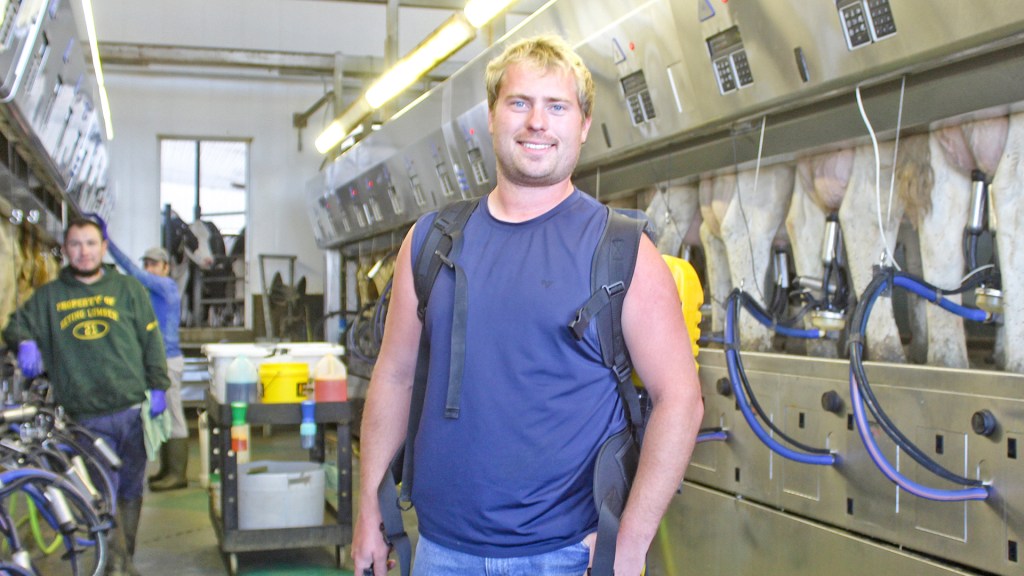
From the show barn to the freestall
Scott’s introduction to Udder Comfort came years ago when he was showing cows. “They gave out samples at World Dairy Expo, and it worked really well,” he recalls. What began as a show-ring product soon became part of their fresh cow routine.
The Stempfles started with the lotion, then switched to spray bottles, and then adopted the backpack sprayer.
“In 2022, they asked us to try the Udder Comfort Battery-Operated Backpack Sprayer. I didn’t think it would fit our system, but they insisted, and they were right,” he says, “It took a few days, but the guys in the parlor really took to it a lot better than I thought they would. It does a more consistent and thorough job, and they like the convenience.”
In 2025, Scott was among the first to try out the new Udder Comfort Parlor Buddy. Unlike the four-gallon backpack sprayer, The Buddy is a lighter one-gallon, handheld, battery-operated sprayer.
Now, he says The Buddy is all they use for applying Udder Comfort in the milking parlor and in the pens, with no disruption to cow flow.

How the routine works
Before switching to the spray systems, employees sometimes skipped applications.
“The sprayers made us more compliant,” Scott reports. “The Buddy makes it easy and fast with one pass under the udder providing the uniform application that is targeted where it is needed most.
“We go through our dry cow and maternity heifer pens and we do those 1x/day at the headlocks when we feed for about a week before calving,” he explains. “Then when they calve-in, we spray them 3x/day in the parlor for the first week of their lactation. Then, if we happen to have a cow with a hard quarter, elevated SCC, or a little flare-up, we do them as needed also.”
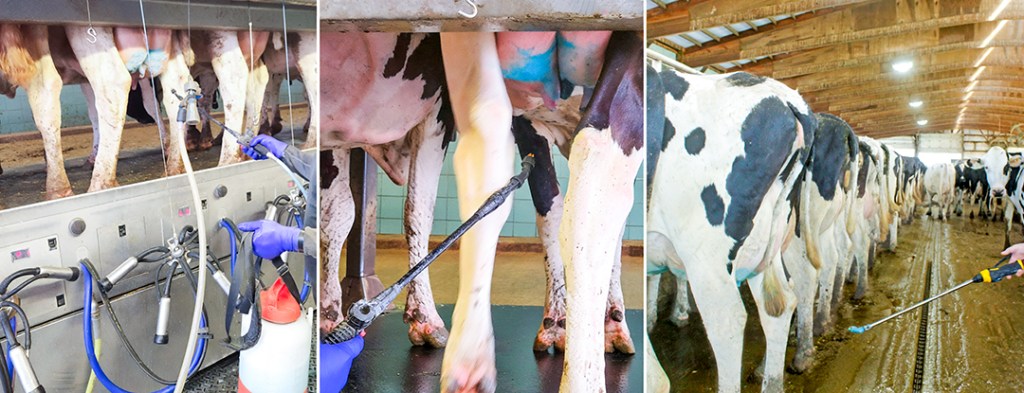
“The Buddy does it. It’s the way to go,” Scott confirms. “It’s compact and light, making it easy to hold it out of the way when using it in the pens, and there’s a shoulder strap if you want to use it. We hang it in the parlor for easy access, and when we have fresh cows in, we just pick it up, push the button, and go down through. It stays clean, holds enough product, and does a nice job of distributing the Udder Comfort evenly with one pass under the udder, front-to-rear.”
The design fits the pace and environment of a working dairy, and the air pressure is quiet and works best by mixing 50% of the thinner yellow Udder Comfort spray with 50% of the thicker blue spray; whereas the Backpack mix is closer to 25% yellow to 75% blue. Both units also work well with 100% yellow spray as well.
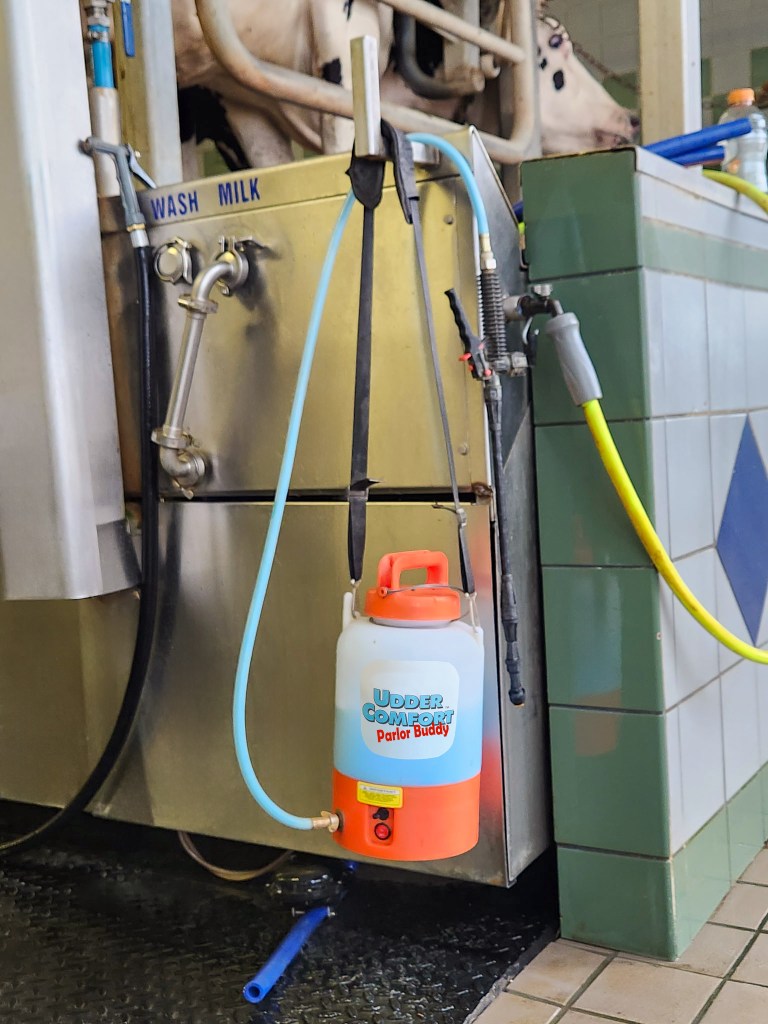
Scott explains the goal is to target the median suspensory ligament, the central area supporting the udder structure and milk flow, and around the teats where swelling can interfere with sphincter muscle response.
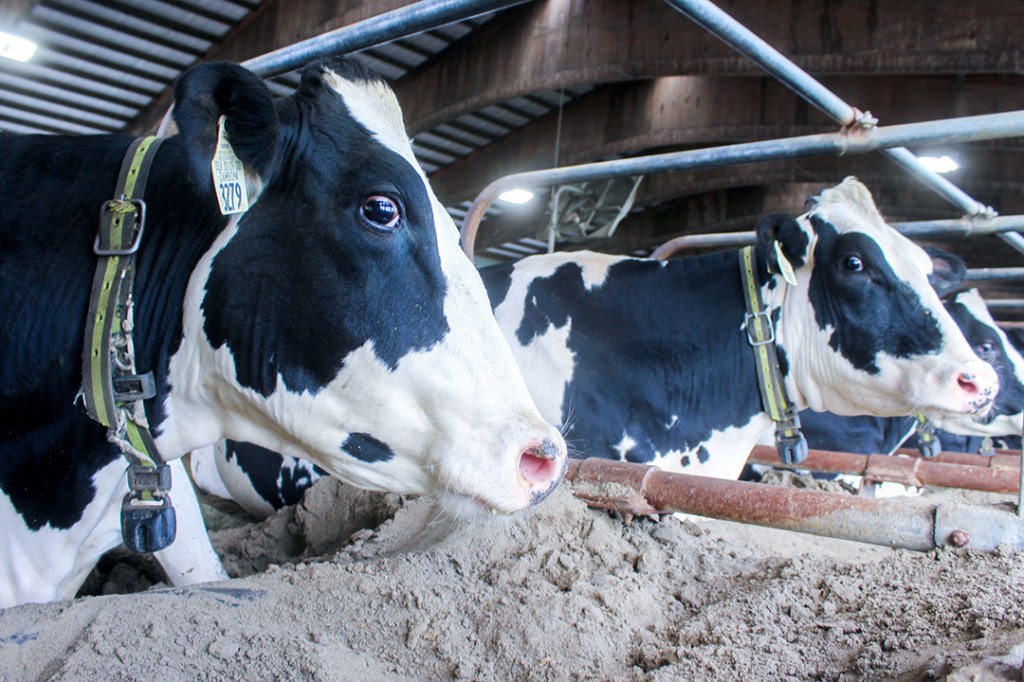
Whether out in the barn or in the parallel parlor, the extended sprayer-wand is a safe, easy reach to the fore-udder where dermatitis (sores) often occur, especially in first-calf heifers during the first 10 to 14 days in milk.
In fact, a 2021 review in the Journal of Dairy Science noted udder edema as a contributing factor to udder scald (dermatitis) and both conditions affect cattle behavior, especially lying time, and can reduce lactation milk yield.
Supporting healthy transitions
Scott considers Udder Comfort an important tool in helping cows transition comfortably from a dry cow or non-milking heifer to milking status. “When we take care of all the other stresses, her feed, water, making sure she has a clean, dry place to lay down, that leaves the udder to think about,” he observes.
“We want to support that circulation. Udder Comfort really works to pull the edema out of the udders,” Scott observes. “When cows are more comfortable, they eat, they drink, they move, and they give more milk, and higher-quality milk.”
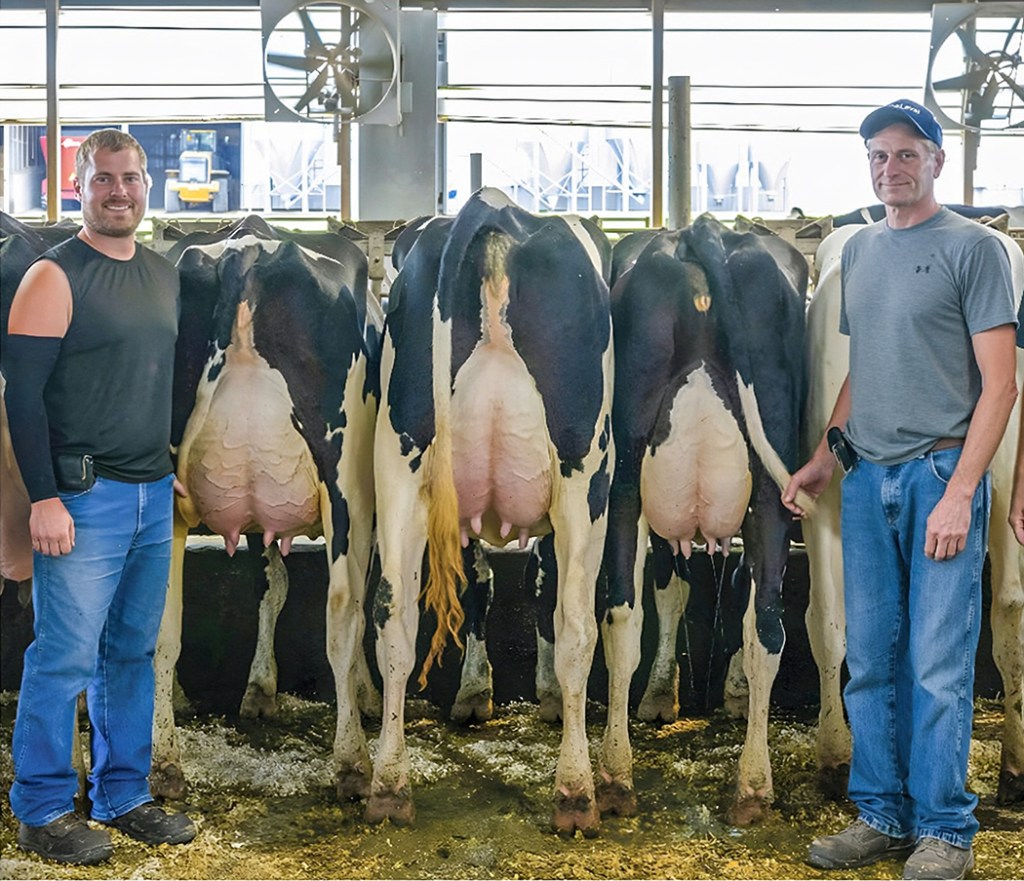
The results speak for themselves: “We see the change in the mammary system. The texture is nicer. Udders are softer with more quality and veination. The milkers fit more snugly and squarely, so you don’t have to worry about squawking. It just helps get the cows up and running to so they can be efficient,” Scott explains the result of calmer cows, better letdown, and cleaner, more efficient milk-out.
A herd built on comfort and detail
Comfort is also built into every other aspect of management at Stempfle Holsteins. Freestalls are bedded twice a week with deep sand and groomed daily while cows are in the parlor.
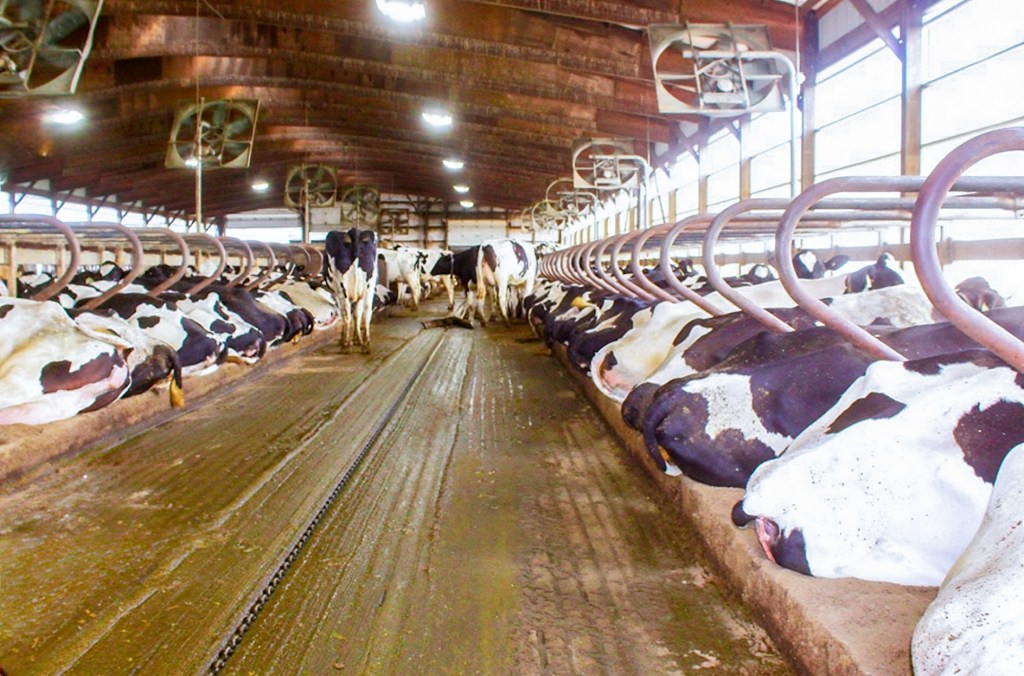
“When we remodeled, we tore out the stalls that weren’t sand and converted them,” Scott says. “We have alley scrapers to keep from disturbing the cows and rubber flooring so they have something soft to stand on.”
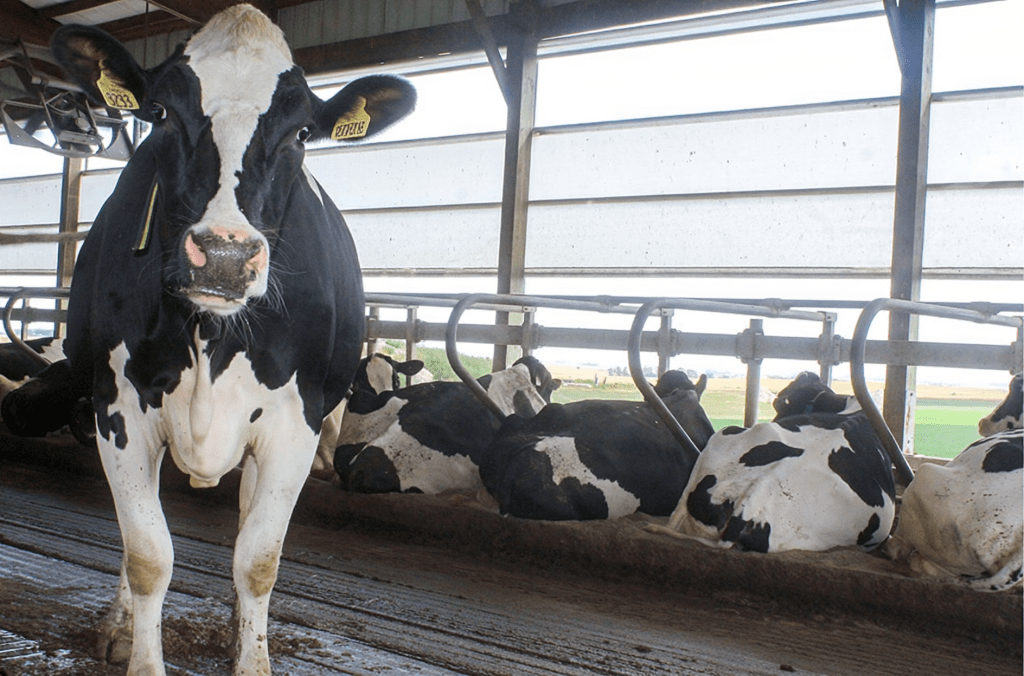
That environment reduces lameness, keeping cows on feed and in production longer. Clean, quiet conditions in prefresh and transition areas support low-stress calving into lactation.
About the farm
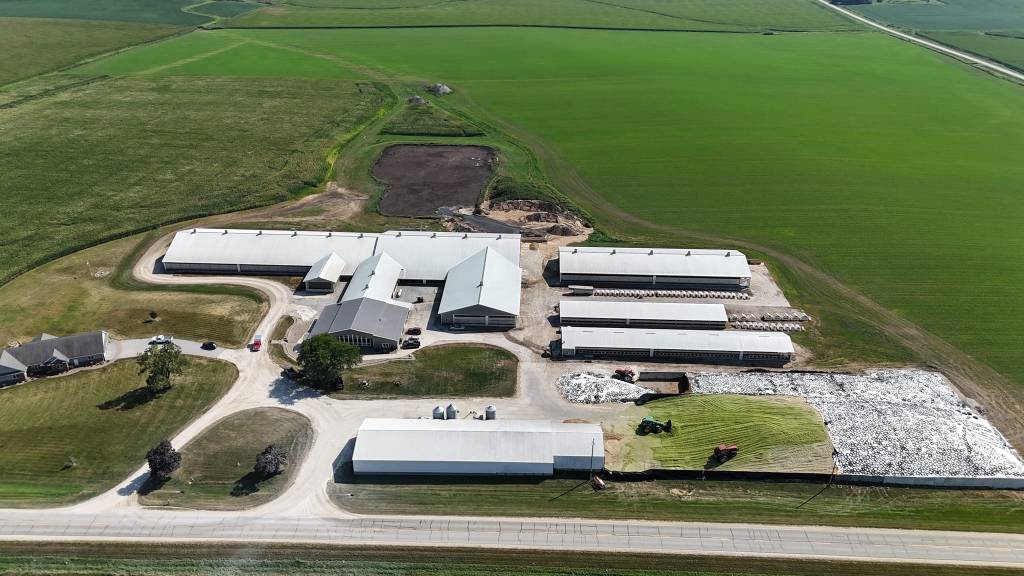
The Stempfles crop 1300 acres, producing most of their feed. They chopped all of it themselves for the first time in 2025 — hay, rye, and corn silage — hauling over 1100 loads, or 27,000 tons of corn silage, at 69% moisture this fall. A new self-propelled chopper and four large carts improved efficiency.
“With larger carts we could chop faster and make fewer trips,” Scott says. “Running our own chopper came with a learning curve, but once you get the hang of it, it’s really pretty easy.”

Manure management follows the same precision. Using a drag-line system with 6- and 8-inch hoses, they can apply manure up to 3.5 miles from the lagoon without road traffic or compaction. Each lagoon pumping includes nutrient sampling for nitrogen, phosphorus, potassium, and organic matter. Every four years, soil tests are paired with manure results to meet DNR nutrient-management standards — all part of protecting water quality and soil health as well as crop production.
Paul and Jody bought the farm in 1989, milking 45 cows. They started attending dispersals and state sales, adding a few registered animals at a time. “If you want to be in it a long time, you’ve got to have better genetics and push forward,” Paul says.
When Scott finished his degree in dairy science technology at Northeast Iowa Community College, he began registering every cow. “That’s when we were off to the races,” Paul reflects.
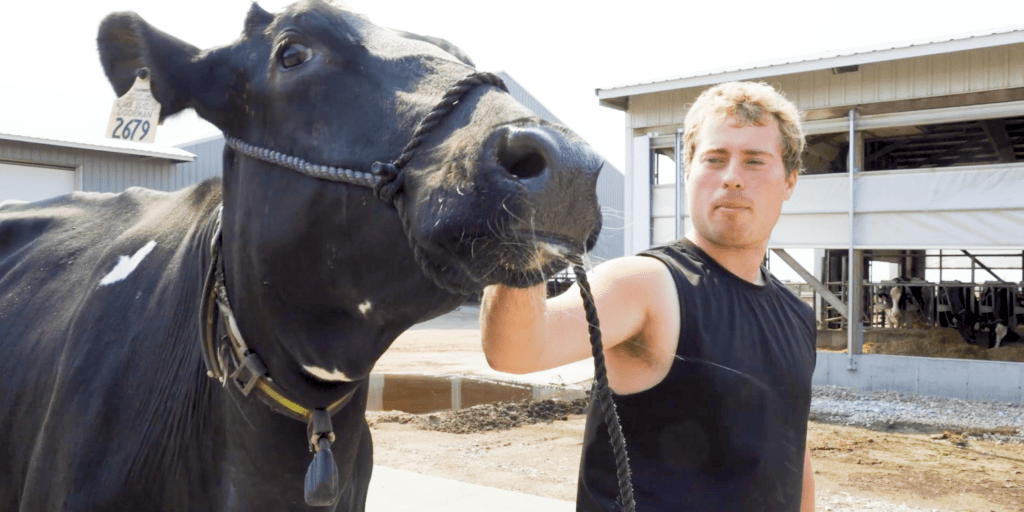
Scott and Jess learned by doing. They showed their own cattle in the youth programs, did the fitting themselves, and Paul enjoyed getting them to the shows. Those early experiences built discipline and ethics that carry forward today, along with appreciation for the cows and Holstein genetics.
Stempfle Atwood Glice and her descendant Stempfle Doorman Glimmer helped put the herd on the map, earning championships at state shows and showing well in their classes at World Dairy Expo.
Balanced breeding
“I like cows with some style and definitely substance,” Scott says. “Everybody likes cows that make milk and components, but we still like them to look the part.”
Over time, the breeding focus evolved to emphasize fertility and health. “We’ve paid a lot more attention to traits like cell count and Daughter Pregnancy Rate,” he notes. “That’s helped us breed balanced, efficient cows that last and advance the herd.”
In July 2025, Stempfle Holsteins was one of four herds featured on the Select Sires Member Cooperative (SSMC) Northeast Iowa Progeny Performance Tour, attended by more than 70 producers. The family partners with SSMC on breeding programs, young sires, beef-on-dairy, and calf-care products.
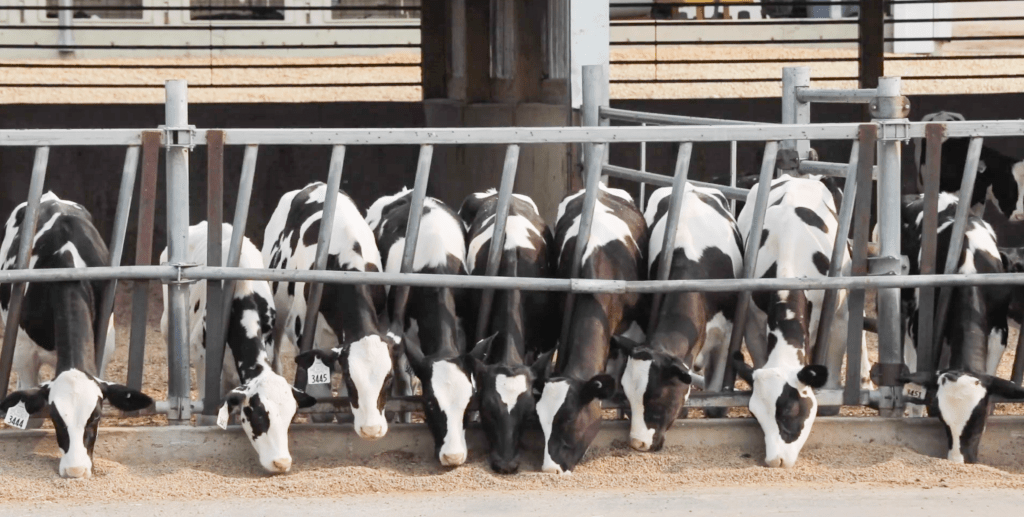
“Fertility and production are our top priorities while continuing to breed for functional type and balanced cows,” Scott says. “The majority of our cows are bred off natural heats and have a 50% pregnancy rate on sexed semen in the milking herd and 55 to 60% first-service pregnancies in the virgin heifers.”
Today, Paul serves as president of the Iowa Holstein Association, known for his years of organizing the state Holstein show, while Scott is recognized as a progressive young breeder moving the herd forward.
Their clean, organized farm has become a destination for university dairy clubs, judging teams, and industry tours. Former Holstein Association USA CEO John Meyers even included Stempfle Holsteins on his personal “retirement tour.”
The passion continues
For Jody Stempfle, the reward is seeing that passion for cows continue.
“Watching Scott in his element with the cows — maybe that’s what I work for every day,” she says. “Being able to work with your family, especially your kids, is one of the best rewards in life.”
“The cow has been the center of my life since the day I was born,” Scott reflects. Looking ahead, he sees opportunity in a changing industry.
“There may not be as many young people going into dairy farming as years ago, but for those of us in it, there’s a lot of opportunity. You set goals, you reach goals, and it’s something you think about at night and wake up excited about in the morning. There’s nothing better than working with your family to help build toward those goals.”
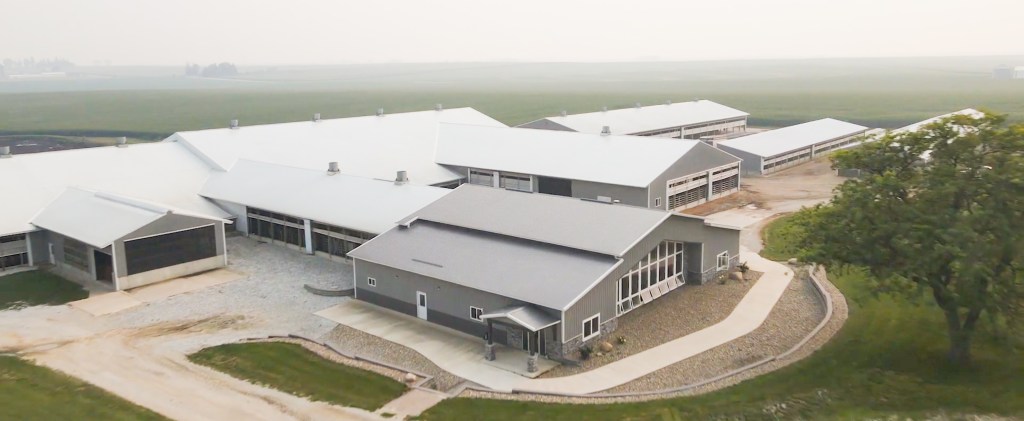
 Profiles in comfort and quality