
DAYTON, Va. — At STOX Dairy in Virginia’s Shenandoah Valley, “Standard of Excellence” is more than the meaning behind the abbreviated STOX herd prefix. For Jeremy and Becky Daubert, it’s an approach that runs through the cattle, the family, and a new barn designed around comfort and flexibility.
The Dauberts recently completed a 54-by-92-foot bedded-pack facility built to accommodate their growing registered show herd from younger heifers through calving and milking cows—all under one roof. That’s no small feat as a design challenge when the herd includes Holsteins, Brown Swiss, and Milking Shorthorns of different ages and sizes.
“We wanted a barn that would work for us for a long time into the future,” says Jeremy, a Virginia Tech Dairy Extension educator.
The project began with an initial assessment through NRCS and the Soil and Water Conservation District about 2½ years ago. Actual construction took about three months, wrapping up in June. Sized for 31 animals, the new barn is already nearly full.
For Jeremy and Becky, who both work full-time off the farm, the goal wasn’t simply more space. They wanted a barn that made caring for cattle easier while providing an environment where animals could be comfortable and develop to their potential.
Comfort designed in
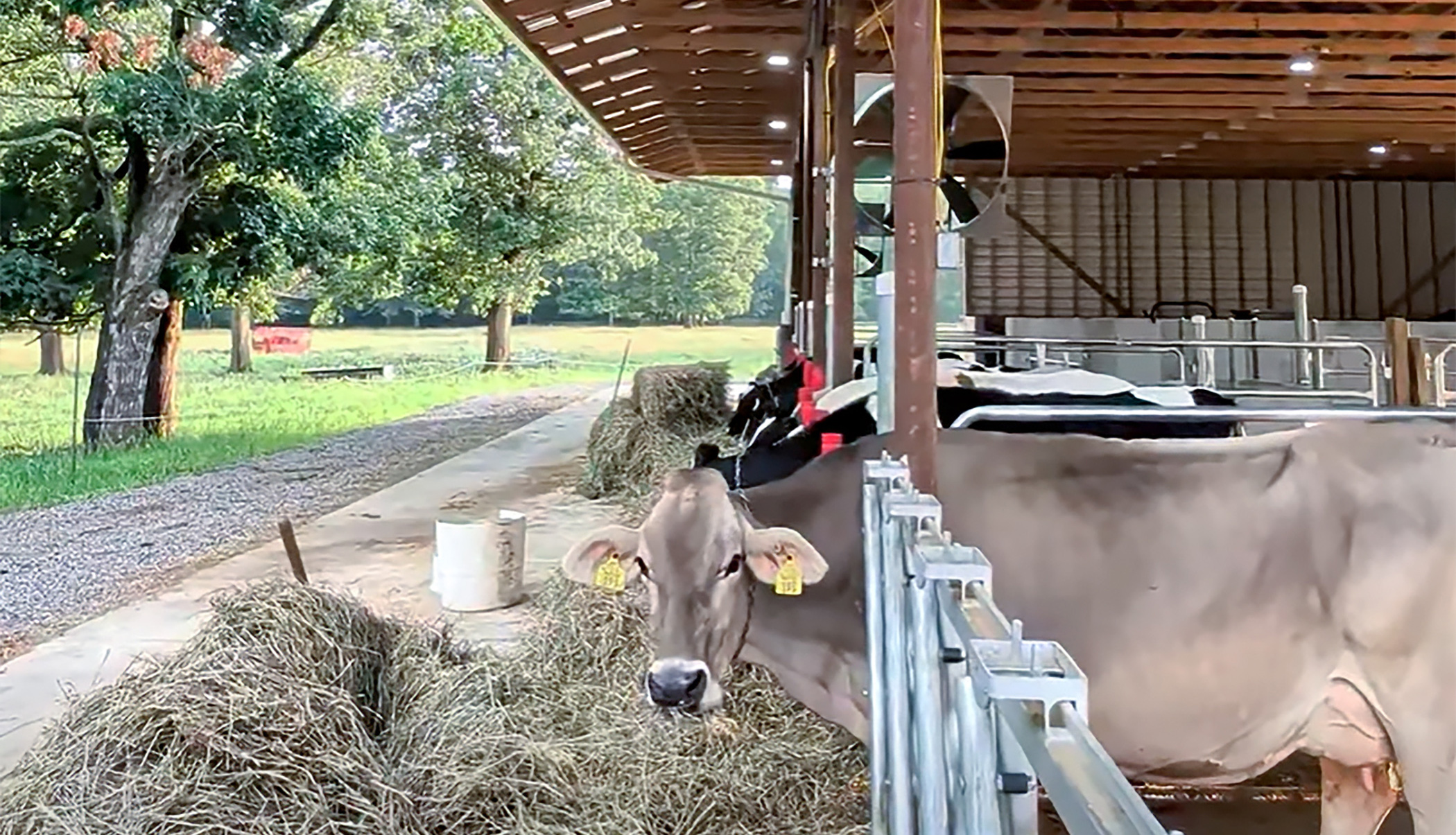
The 42-by-56-foot bedded pack can be divided into four pens for younger heifers, bred heifers, dry cows and milk cows. Telescoping gates clear out of the way when it’s time to till or clean the pack, while adjustable headlocks at each end accommodate heifers and mature cows. EasyFix feed rails serve the middle pens.
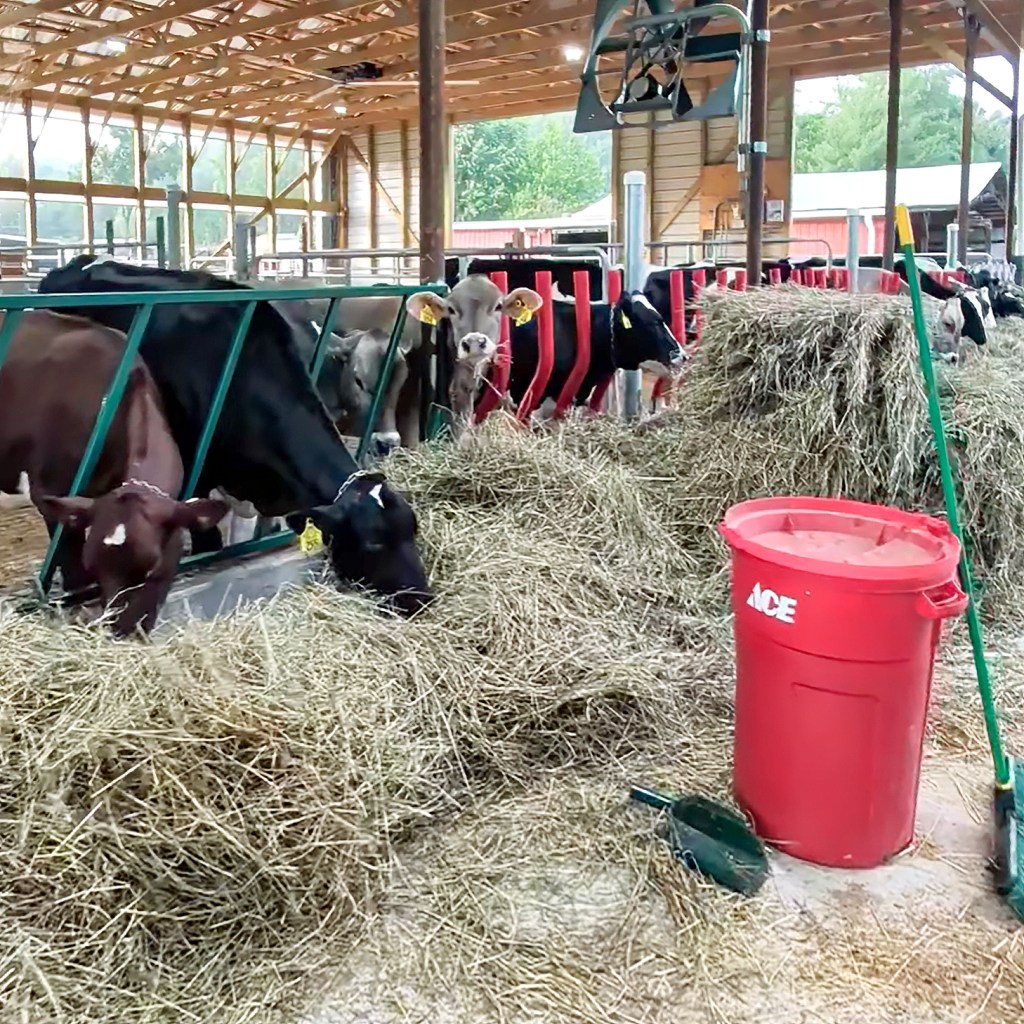
“We wanted headlocks, but not headlocks everywhere,” Jeremy explains. “The cows use the feed rails really well. They keep cows from pushing each other around.”
The Dauberts paid just as much attention to what’s above the cattle. Two 16-foot variable-speed ceiling fans move air across the bedded pack, while two 52-inch fans provide additional alley airflow. Shady Lane sidewall curtains and the fans are integrated through the AutoVent system.
Jeremy admits wondering whether he was overdoing the ventilation with “too much fan,” he says. “But recently, when it was 100 degrees, I was really glad I had both.”
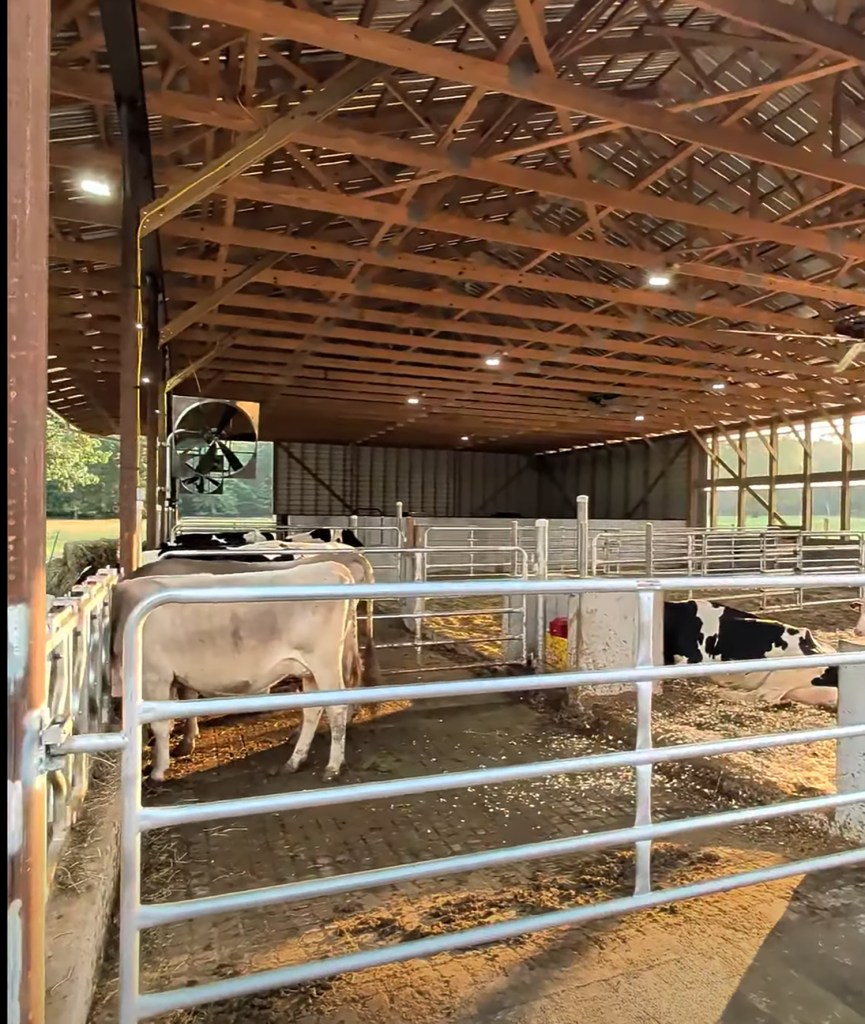
Because Jeremy and Becky frequently do chores before or after their off-farm workdays, lighting mattered too. “I wanted it to be like daylight in here,” Jeremy says of the 12 LED fixtures. “It’s turned out really well.”
Even underfoot, cow comfort factored into the choices. Diamond-grooved concrete provides traction, while the packed-clay bedded pack is maintained with shavings and regular tilling.
“It takes a little more work than we had before,” Jeremy acknowledges, “but it’s definitely nicer for the cows.”
Udder comfort is part of the routine
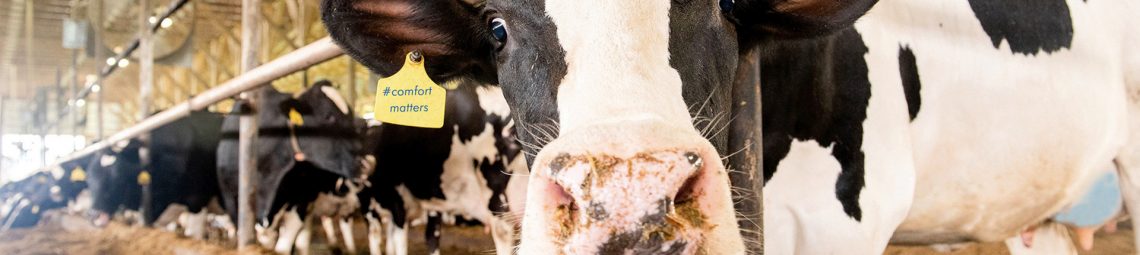
That focus on comfortable cattle isn’t new for the Dauberts. Udder Comfort has long been part of their fresh-cow routine and preparation of show cattle.
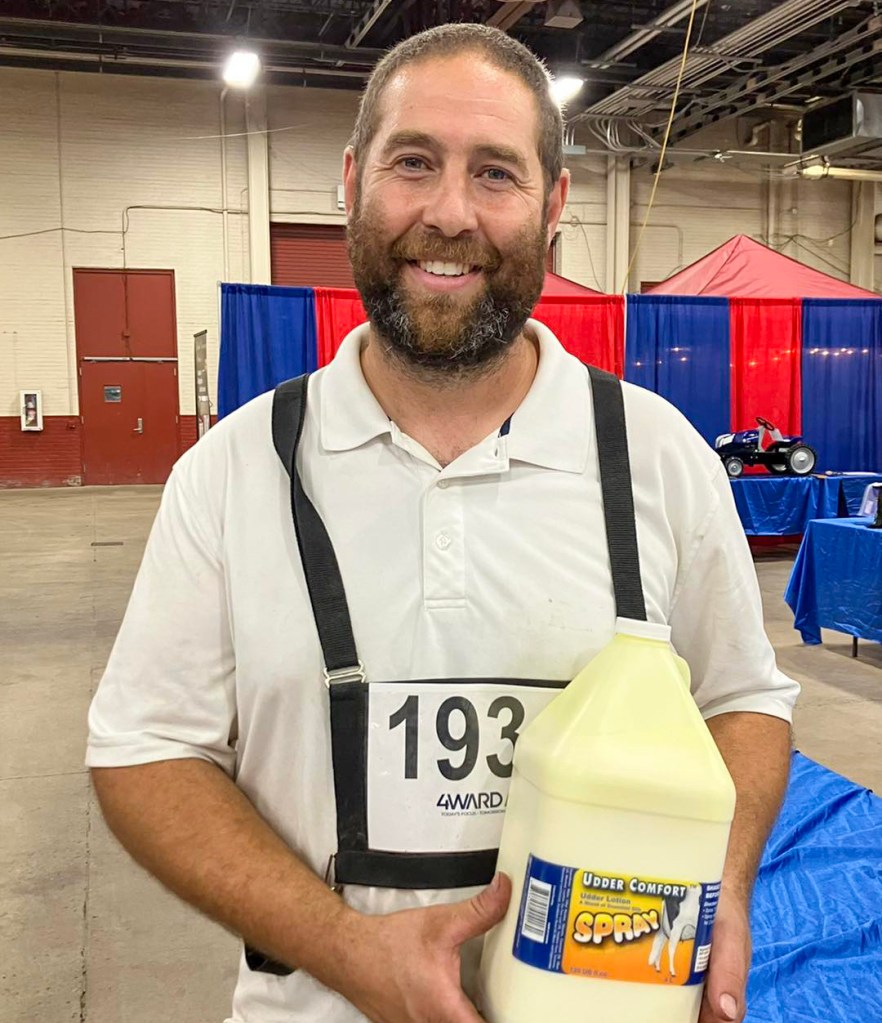
“We’ve always used Udder Comfort on fresh cows 2x/day for 7 to 10 days after calving,” Jeremy says.
“We also start applying Udder Comfort 1x/day for 7 to 10 days before a show and use it every 45 minutes while bagging on show day, also putting it on afterward when we milkout,” Jeremy explains. “It really brings out the quality.”
Having tried alternatives, Jeremy says the reason they’ve stayed with Udder Comfort is straightforward: “What I like best about this product is that it works. I tried all the other brands, and this one works better than anything else, while also being gentler to the skin.”
The new barn at STOX Dairy now provides a better environment for carrying that same attention to cattle through every day — from the fresh pen and feed bunk in the new barn to the milking area in the existing barn, and eventually, for some, to the show ring.
Built around a dairy family
The STOX herd is also where the next generation has learned to care for cattle and make management decisions.
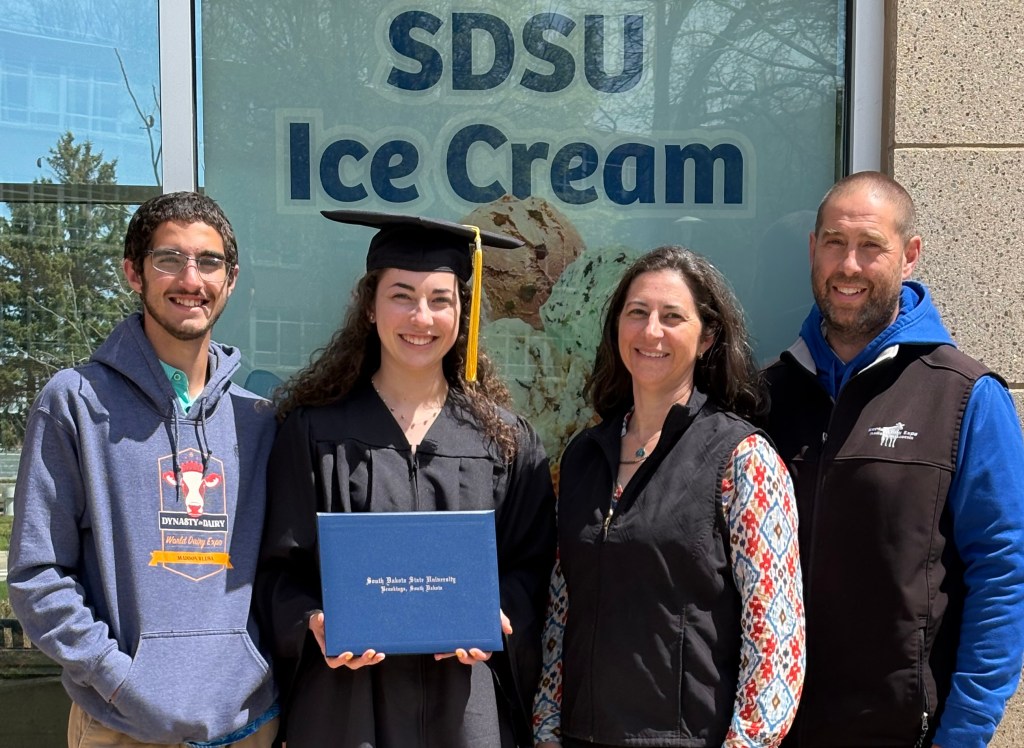
Daughter Hayley recently graduated from South Dakota State University with a bachelor’s degree in dairy manufacturing and is now working as a dairy foods manufacturing trainee for Land O’Lakes. Her experiences have ranged from a food safety internship with Sargento to this year’s U.S. Dairy Education and Training Consortium in Clovis, New Mexico.
Son Trey, a student at Turner Ashby High School, is active in 4-H, FFA and the Virginia Junior Holstein Association, competing in dairy judging, Quiz Bowl, Skillathon, public speaking and cattle shows.
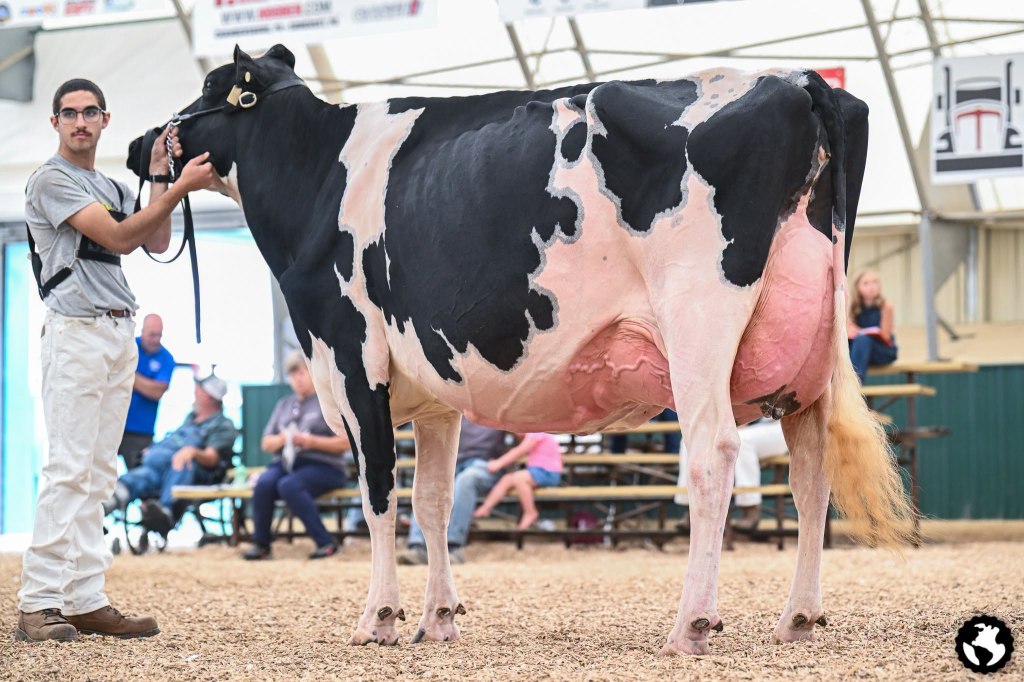
Show season is also a busy time. Recently at the Virginia Holstein Association’s All Breeds Summer Showdown, Trey exhibited grand champion Holstein Tramilda Aristocrat Peacock, who went on to be named Supreme of both the open and junior shows. He also earned junior champion Milking Shorthorn with Hard Core Inspired FireProof P and HM junior champion Brown Swiss with JBR Daredevil Tapioca.
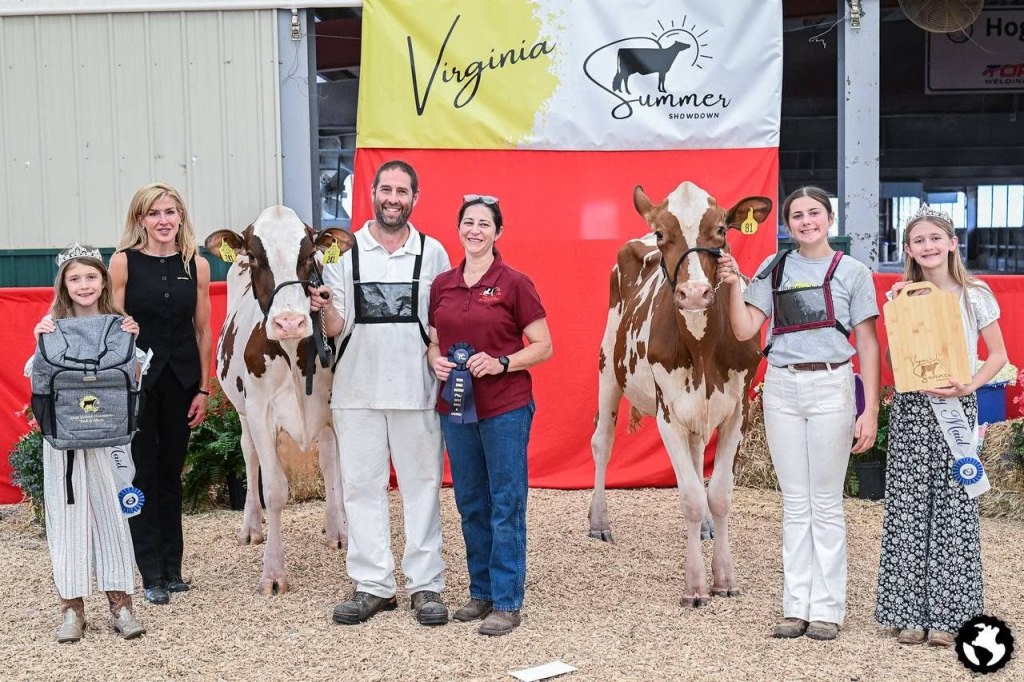
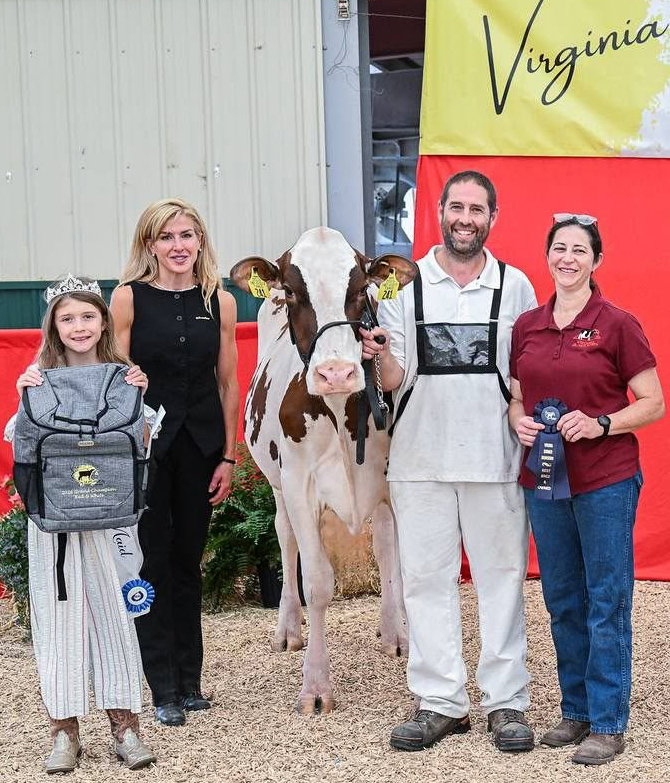
Jeremy and Becky exhibited the grand champion Red & White STOX Tango-Red, also named best bred-and-owned.
Built for today—and tomorrow
The barn they come home to, represents the long view. A concrete heavy-use area connects the new facility to the original barn, where the Dauberts continue milking. What had been mud is now a clean concrete pad for moving cows — and a convenient place for washing show cattle.
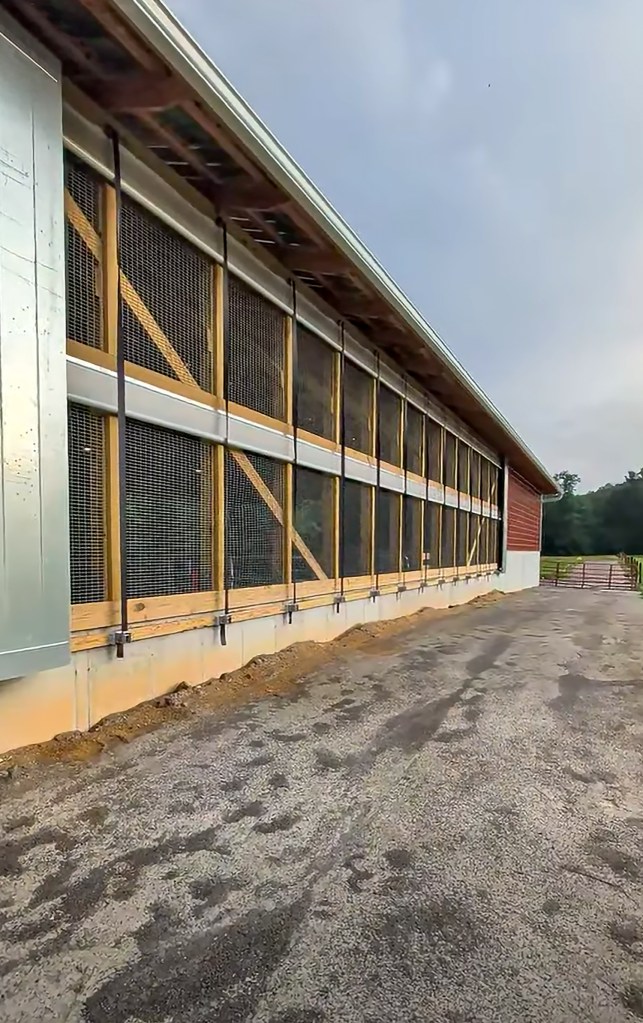
The setback alongside the barn became a stone-and-asphalt lane connecting cattle to rotational grazing paddocks. Water infrastructure supports grazing, while drainage from the farm’s buildings is directed through a 12-inch underground culvert.
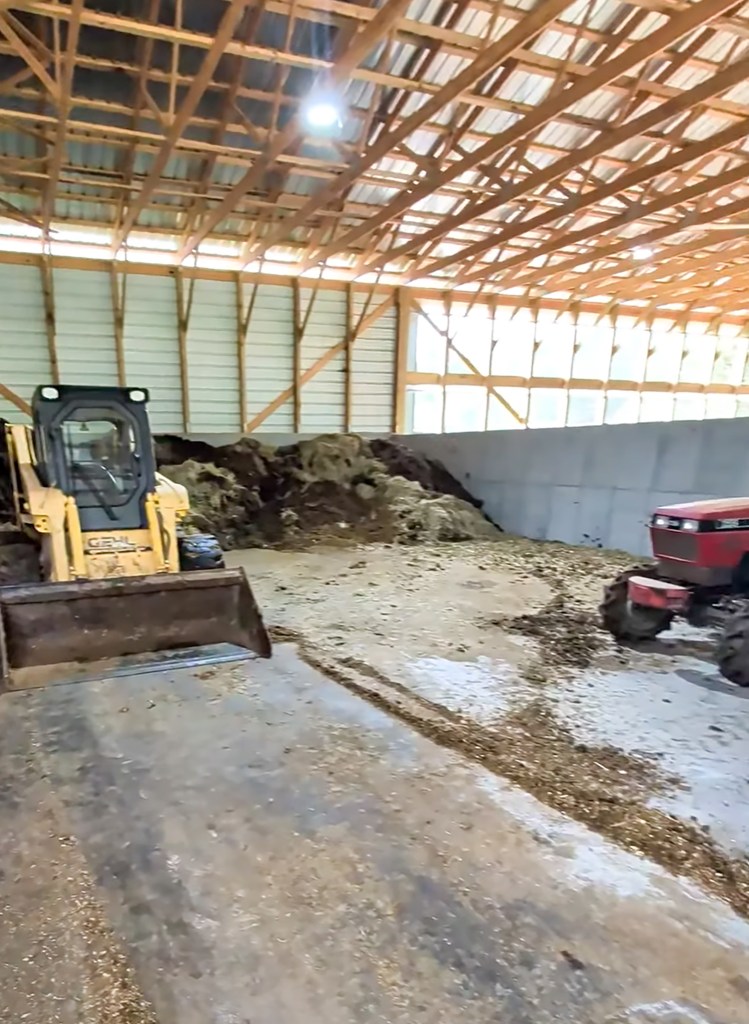
Covered manure storage is incorporated into the barn design at the south end with an 8-foot wall, ventilation along the eaves, and curb to keep liquids contained.
Jeremy’s biggest change during the construction phase was to expand the original plan for a 4-foot feeding apron to 14 feet. Two coats of epoxy were applied 30 inches from the reinforced curb for a smooth surface to push in, sweep up, and for the cows to eat on.
“We could have added 6 feet of concrete to get to 10 to match the front roof overhang, but we added 10 to get to 14, which matched the concrete all the way at the end of the barn,” he explains.
“We are really glad we did that. I would highly recommend never going less than 10 feet. It rained here today, and 10 foot would have gotten us pretty much in the dry, but that extra 4 feet of concrete is so much nicer for cleaning up,” he adds. “We’re able to set big bales of hay here, spread them out, keep feed barrels out here. We can work underneath the roof and be on concrete.”
These are just some of the details demonstrating the Dauberts’ philosophy that comfortable cattle depend on getting a lot of little things right.
Jeremy also wanted to avoid building something so specialized that it couldn’t change with the family.
“If we pivot to beef cattle or something else in the future, we think this barn will be serviceable for that as well,” he says. “Not that we’re looking to do that, but we wanted to be as flexible for whatever we — or whoever in the future — puts in this barn.”
For STOX Dairy, that’s another expression of their Standard of Excellence: creating an environment where cattle can be comfortable, cared for, and given every opportunity to reach their potential both in and out of the showring.
-30-

